
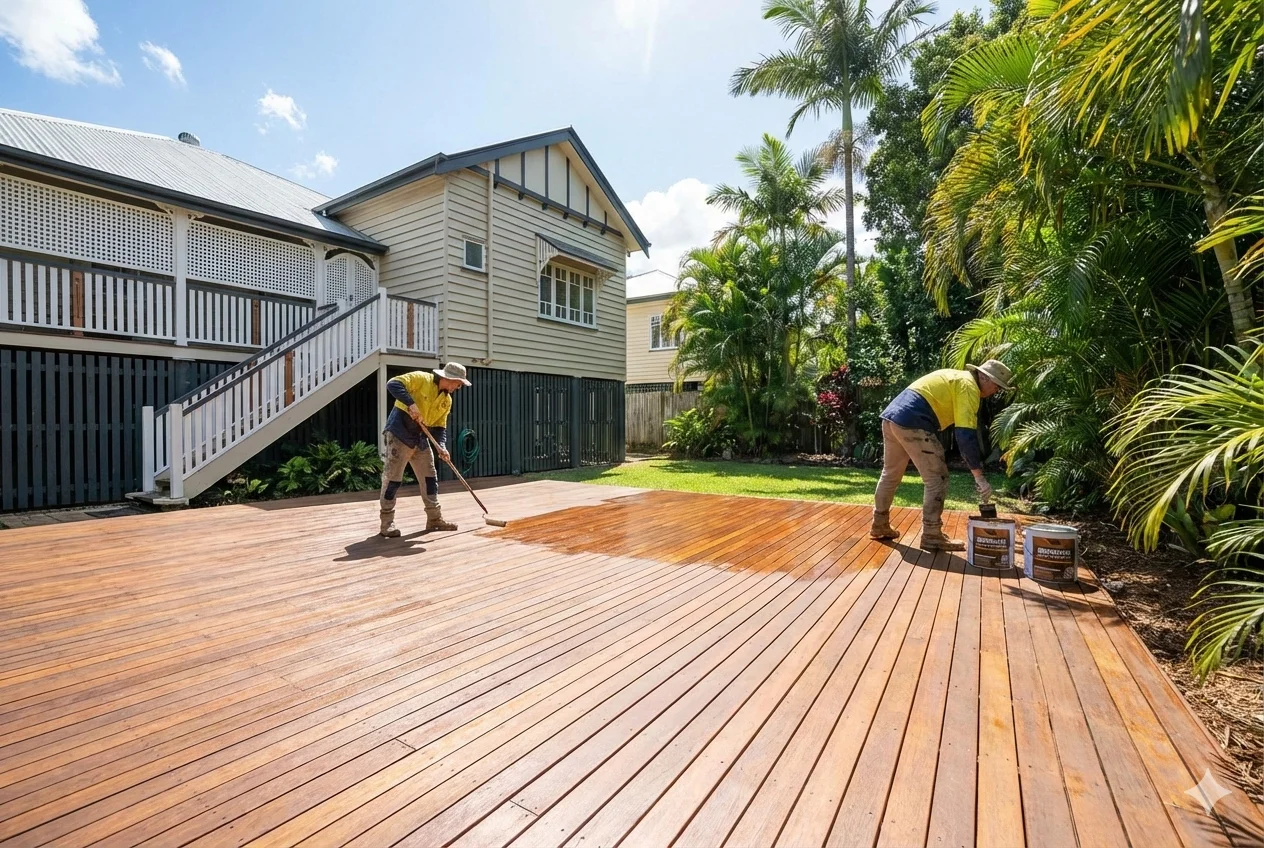
In Brisbane’s sun-drenched climate, a wooden deck is like an open invitation to nature’s toughest elements. Without protection, your deck can easily crack, fade or even start rotting. Deck Staining & Sealing is the trick that gives your deck a waterproof “raincoat” and an invisible SPF against UV rays. Think of it as sunscreen for your timber – it keeps moisture out and colour in. In this blog, I’ll walk you through why this simple step is a total game-changer for Brisbane homes.
Brisbane’s Climate: Your Deck’s Arch-Enemy
Brisbane’s subtropical weather is hot and humid most of the year. We get blazing sun and heavy downpours (hundreds of millimetres of rain in a typical summer). Decking experts warn that “moisture can seep into unsealed wood, leading to swelling or warping, while UV rays can weaken the structural integrity” of your boards. In short, our weather is like a constant sunbath and rain shower for your deck. Deck Staining & Sealing is not optional here – it’s what keeps your deck from going grey, warped or rotten.
One sweltering summer afternoon, I caught my mate squinting at my deck and joking it needed sunglasses. Too funny? Maybe not. Intense Queensland sun can dry out timber, making it crack and fade, while sudden rains can cause water damage and mould. Sealing and staining your deck is like giving it an invisible raincoat and sunscreen: it keeps water out and your wood’s rich colour in. Bottom line: Deck Staining & Sealing isn’t optional – it’s the difference between a deck that thrives and one that dives.
Key Benefits of Deck Staining and Sealing
You’ve invested in a beautiful deck, so let’s make it last. Here’s why doing a proper stain-and-seal combo is worth it:
- Moisture & Rot Protection: A quality sealer forms a water-repellent barrier. Rainwater beads off instead of soaking in. This prevents boards from swelling, warping or rotting after heavy storms. In fact, one decking guide warns that sealing “prevents water from penetrating the wood,” maintaining its strength and lifespan.
- UV & Fade Prevention: Tinted stains block harsh UV rays. Brisbane sun can bleach timber quickly, but stains counteract this by adding pigment and UV inhibitors. An unprotected deck will turn dull and grey over time, whereas a properly stained deck stays vibrant much longer.
- Enhanced Appearance: Both clear sealers and coloured stains make the wood’s natural grain pop. A quality finish gives a warm sheen and highlights patterns. As experts note, sealing brings out the timber’s natural beauty and keeps it from turning lifeless. The result? Your deck looks almost brand-new and invites more outdoor hangouts.
- Longevity & Value: A deck is a big investment. Proper upkeep protects that investment. Ignore sealant and your deck risks water damage, cracking or decay, which leads to expensive repairs down the track. Industry pros warn that skipping protection can invite “expensive surprises”. By sealing regularly, you “reduce the need for costly maintenance and preserve the deck’s structural soundness”. In short, Deck Staining & Sealing = longer life (and fewer tears in your beer!). Not sure where to start? Local experts like Bernard Building offer pro Deck Staining & Sealing services to handle it.
- Preventing Other Problems: A good sealant can also deter mould, mildew and even pests. Unsealed wood’s damp corners become prime spots for slippery algae or termite trouble. Using a mildew-resistant finish keeps that green stuff at bay. Plus, in Queensland’s humidity, a treated or coated deck is another line of defense against termites. Bottom line: Deck Staining & Sealing is the easiest way to extend your deck’s life.
Stains, Sealers & Oils: What’s the Difference?
Deck coatings come in a few types. Here’s a quick rundown to keep straight what each one does:
– Clear Sealer: A transparent finish that lets the natural colour show through. It forms a water-resistant layer on the surface, repelling rain with minimal colour change. Ideal if you love the original timber tone.
- Effect: Wood looks almost bare with a subtle sheen.
- Protection: Strong against water, but only mild UV protection.
- Recoat: Usually every 1–2 years.
- Tinted Stain: Adds pigment and shields from UV. Stains come in many shades (rich browns, greys, etc.) and their pigments give strong UV defence. Use stains to change or enrich the deck’s hue.
- Effect: Tint changes or deepens colour and highlights grain.
- Protection: Excellent UV block; moderate water resistance.
- Recoat: Typically 1–2 years, or when you notice fading.
- Deck Oil: Penetrating oils soak into the timber, nourishing and enhancing the grain. They leave a matte finish and only subtly darken the colour. Oils repel water and give some UV protection, helping prevent cracks and cupping.
- Effect: Very natural, matte look with a warm tone.
- Protection: Water-repellent and moderate UV defense.
- Recoat: Often needed every 6–12 months in our harsh sun.
- Paint: (Solid coating) Opaque layer that hides the grain. Gives the strongest barrier against UV and moisture, but will cover the wood’s natural beauty. Typically lasts ~5+ years before repainting.
| Finish | Appearance | Protection | Typical Recoat Interval |
| Clear Sealer | Transparent, natural look | Water-repellent; minimal UV block | ~1–2 years |
| Tinted Stain | Tinted colour, highlights grain | Strong UV protection; moderate water resistance | ~1–2 years |
| Deck Oil | Matte finish, enriches tone | Penetrates wood; water-repellent & UV resistant | ~1 year (6–12 mo) |
| Paint | Opaque; hides wood grain | Excellent UV & moisture barrier | ~5 years or more |
Be sure to prep properly: clean the wood and let it dry fully before any Deck Staining & Sealing step. Skipping prep is a common mistake – a deck with mildew or peeling finish just won’t hold a new coat. Mistakes to avoid: Don’t apply stain on a rainy day, skip sanding, or leave thin patches. And always watch the weather: a storm right after sealing will wash it away!
Tips & Tricks (Pro Advice)
- Work on a cool, shaded day to prevent the finish from drying too fast.
- Apply stain/sealer with a brush or roller with the wood grain (not against it) to avoid streaks. Sprayers often leave drips and uneven coverage.
- Sand any glossy or flaking spots first so the coating grips evenly and looks smooth.
- Plan for at least two coats of stain/sealer per application; thin, even coats last longer.
- Seasonal timing: Aim for autumn or spring in Brisbane, after the intense summer sun or storms. This gives each coat time to cure properly in mild conditions.
- Pro Tip: Treat each cleaning and prep step as part of your Deck Staining & Sealing process. A spotless, dry deck will soak up the finish evenly.
Read Also: Top Mistakes Brisbane Homeowners Make With Deck Staining & Sealing
Conclusion
Ultimately, a sealed and stained deck is one you’ll enjoy for years to come. Keep it clean and recoated on schedule, and it will stay beautiful through Brisbane’s summers and mild winters. If water no longer beads on the surface or the wood looks tired, it’s time for another coat of stain or sealer. Your future self (and your BBQ guests) will thank you! So don’t skip it: Deck Staining & Sealing is the final touch that keeps your deck forever young (and you worry-free).
FAQs
What happens if I don’t stain and seal my deck?
In Brisbane, most decks need deck staining & sealing every 12 to 18 months. Our strong sun, humidity, and summer storms wear finishes down faster than in cooler cities. If your deck looks faded, feels dry, or no longer repels water, it’s time. I always say: if water stops beading on the surface, your deck is asking for help.
Is deck staining & sealing better than painting?
It depends on the look you want. Deck staining & sealing keeps the natural timber grain visible and feels more relaxed and modern—perfect for Brisbane outdoor living. Paint hides the grain completely and can peel under heat. Most homeowners prefer staining and sealing because it:
Looks more natural
Handles heat better
Is easier to recoat and maintain
What’s the best time of year for deck staining & sealing in Brisbane?
The sweet spot is autumn or spring. Temperatures are mild, humidity is lower, and there’s less risk of sudden storms. Summer heat can cause finishes to dry too fast, while winter rain can delay curing. Planning your deck staining & sealing around the season makes a huge difference in how long it lasts.
How long does deck staining & sealing take?
Most residential decks take 1–2 days, depending on size, condition, and drying time. Day one is cleaning and prep. Day two is staining and sealing. Rushing the process is a mistake—I’ve seen decks fail simply because someone didn’t let the timber dry properly.
How do I know my deck needs resealing?
Look for these signs:
Water soaks in instead of beading
Colour looks dull or uneven
Timber feels rough or dry
Fine cracks or splinters appear
If you spot any of these, it’s time for deck staining & sealing before small issues turn into expensive repairs.