Imagine stepping out into your lush Queensland garden, the sun on your face, and a beautifully crafted staircase inviting you to explore further. Outdoor stair construction Brisbane projects do more than connect levels – they transform your backyard into a functional, welcoming space. In this guide, we’ll walk you through everything you need to know about outdoor stair construction in Brisbane – from local building rules and design tips to materials, costs, and installation.
Think of me as your friendly local stair-builder, sharing insights after years of crafting decks and staircases under the Brisbane sun. By the end, you’ll feel confident planning the perfect exterior stair construction solution for your Brisbane home.
What Building Codes Govern Outdoor Stairs in Brisbane?
First things first: even a simple garden stair needs to meet Australia’s building standards. In Brisbane, that means following the National Construction Code (NCC) and Queensland’s specific codes. The Queensland Development Code (QDC) compiles local building rules that complement the national code. In fact, the Brisbane City Council explicitly reminds homeowners that any renovation or extension – including outdoor stairs – must comply with the QDC.
Practically, this means your outdoor stairs must meet NCC requirements for safety and accessibility. For example, the NCC and Australian Standard AS 1657 (for fixed stairways) set limits like a maximum riser height of 190 mm and minimum tread (going) of 240 mm. Handrail heights must typically be between 900–1100 mm, and balustrade gaps no more than 125 mm apart.
These standards ensure your stairs are comfortable and safe to use. Designers often use the rule of thumb “2R + G ≈ 600 mm” (where R is riser height and G is going depth) to balance step size – for instance, 2×180 mm + 240 mm = 600 mm, well within the AS 1657 range. Uniform steps are a must too – all risers and goings on one flight should match within about ±5 mm, so each step feels predictable underfoot.
In short: whether it’s a small porch stair or a grand hillside staircase, Brisbane’s regulations demand compliance with the NCC and QDC. Before building, check with the council and your builder to make sure the design ticks all the boxes (including any local site concerns like flooding or bushfire zones).
Designing Your Outdoor Staircase: Key Considerations
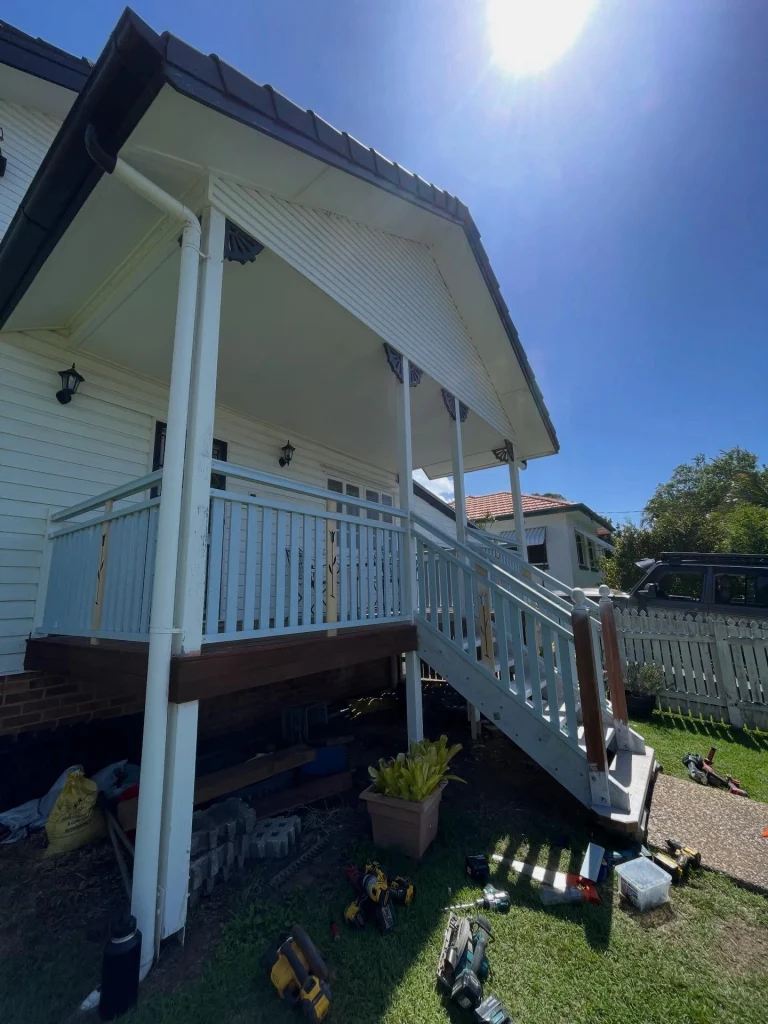
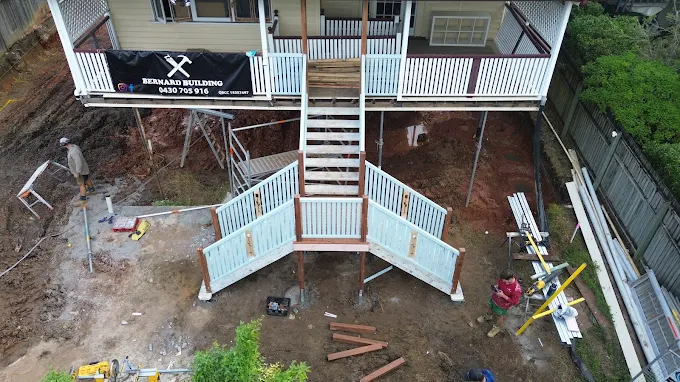
A great stair is more than just steps – it’s a feature that enhances your home. When planning an outdoor staircase design, consider both style and safety to create durable custom outdoor stairs for your property. First, decide how your stairs will fit the space: are they leading up to a deck, down to a garden, or wrapping around a pool? The layout (straight, L-shaped, U-shaped, curved) should complement your home’s look.


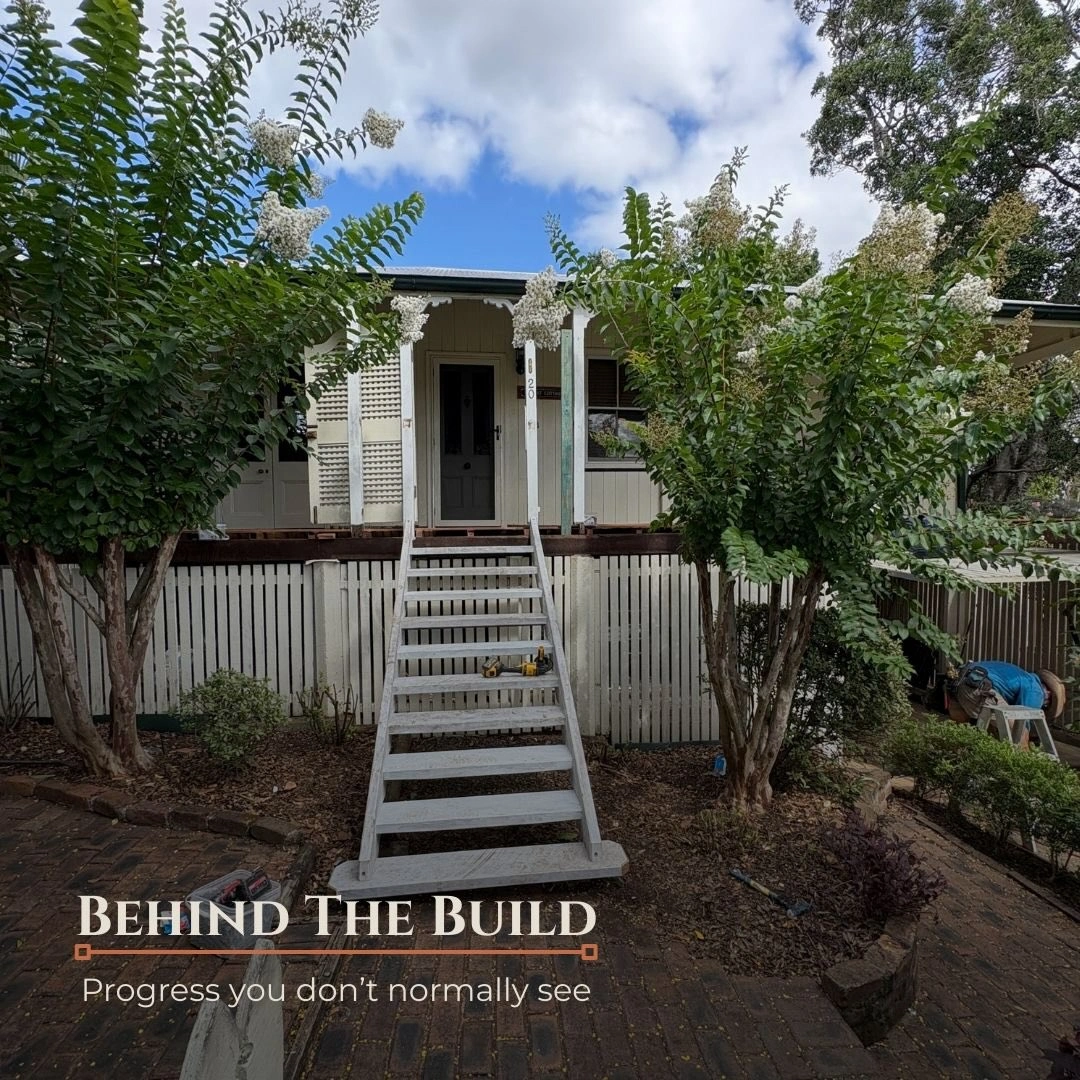
For instance, a modern Brisbane home might favor sleek metal stringers with timber treads, while a classic Queenslander might call for solid hardwood stairs that echo its heritage. Think about the staircase as part of your architectural “story” –beautifully crafted custom outdoor stairs can truly turn your outdoor area into “something special”.
Safety is equally crucial. Ensure the steps and landings are level and well-lit. Landings are required for every 17 steps or when stairs change direction, giving people a chance to rest. Handrails and balustrades are mandatory – a good rule is a handrail height around 1000 mm and vertical balusters spaced tightly (max 125 mm apart) to prevent falls, especially if you have kids. Make the edge of each tread visible (contrasting paint or an anti-slip nose), and use slip-resistant finishes since Brisbane’s rain can make steps slippery.
Key design check-points:
Compliance: Meet NCC/AS rules for riser height, tread depth, handrails, and landings.
Dimensions: Uniform risers/goings (e.g. 170–190 mm risers, 240–300 mm treads) keep each step predictable.
Handrails/Balustrades: Required on any flight over two risers. Height typically 900–1000 mm, with no large gaps.
Materials & Finishes: Choose weather-resistant materials (see below) and consider non-slip coatings or lighting for safety.
Site Integration: The staircase should tie into your landscaping and architecture – ask yourself how it looks from every angle.
Bernard Building’s approach is to balance beauty with function. As we say, each staircase “complements your property’s aesthetic while offering durable, safe, and easy-to-use access”. It’s not just about climbing up or down – it’s about how the stair enhances your home’s outdoor living.
Choosing Materials: Timber vs. Concrete (and More)
The choice of material plays a major role in the success of any outdoor stair construction project. In Brisbane, the two main contenders are hardwood timber and concrete, each with its own benefits. (Other options like steel or composite exist, but timber and concrete dominate backyard applications.)
| Material | Advantages | Considerations |
| Hardwood Timber (Merbau, Spotted Gum, Blackbutt, Jarrah, etc.) | Warm, natural look that complements many homes. Generally easy to cut and install. Certain hardwoods (like ironbark) are highly durable and termite-resistant. | Requires regular sealing or oiling to withstand Brisbane’s sun and rain. Timber can eventually warp or crack if not maintained. Higher-end woods cost more; treated pine is cheaper but less durable. |
| Concrete (Poured in place or precast steps) | Extremely durable and long-lasting. Can be shaped into curves or any design. Low maintenance and fire-resistant. Available in decorative finishes (stamped, exposed aggregate). | Heavier construction, requiring solid footings and formwork. Installation takes longer. Can crack over time if not reinforced properly. Gives a more industrial look (can be softened with wood facings). |
Both materials can make terrific outdoor stairs – the best choice depends on your style, budget, and maintenance preference. Timber stairs bring a classic, tropical vibe perfect for many Brisbane homes (especially Queenslanders). Hardwoods like merbau or jarrah hold up well underfoot and weather if regularly treated. Concrete stairs offer a modern, brutalist edge and will likely outlast timber without needing much care. They do need good formwork and possibly rebar reinforcement during installation.
If you’re considering timber outdoor stairs, the cost of materials can vary significantly depending on the timber species and design. Basic treated pine stringers with pine treads are budget-friendly, while exotic hardwoods (spotted gum, ironbark) are premium. Many builders (including us) offer options – for instance, Bernard Building often uses Merbau or Spotted Gum for that blend of durability and aesthetics.
Concrete outdoor stairs are more labor-intensive: expect a poured staircase to cost roughly $200–$500 per step for a standard design. Decorative or reinforced concrete stairs can be $500–$1,200 per step. In general, a simple concrete flight might end up more expensive than a comparable timber one, but both can fit in a homeowner’s budget with good planning.
No matter which material you lean towards, it’s smart to mix and match for style and safety. For example, you could build concrete stairs and cap them with timber treads, or install metal handrails on a wooden stair for a contemporary look. The key is quality: use stainless steel fixings to prevent rust and apply weather-resistant finishes on timber. This protects against Brisbane’s moisture and termite risk.
How Are Outdoor Stairs Built? Step-by-Step
Outdoor stair installation is a multi-step process that requires careful planning and expert workmanship., but breaking it down makes it manageable. If you’re planning a DIY project or just want to understand the tradespeople’s work, here’s a typical workflow:
Design and Permits: Finalize your stair design (shape, number of steps, materials) and get any necessary approvals. For Brisbane, that likely means ensuring compliance with NCC/QDC (as above) and getting council development approval or a building permit if required. Check fire and pool regs if relevant.
Site Prep and Footings: Mark out the stair location and dig footing holes. For timber stairs, you’ll often pour concrete footings at the ends or at landings. For concrete stairs, you’ll outline the formwork area. This base must be solid: a common approach is a reinforced concrete pad or stem wall, especially if stairs are steep or under heavy load.
Construct Stringers/Formwork: For timber stairs, cut and set your stringers. These are the support beams with notches for treads and risers (you may use steel stringers or prefabricated galvanized brackets too). For concrete stairs, build sturdy formwork – wooden molds to hold the poured concrete – and install any required rebar reinforcement inside.
Install Treads and Risers: If timber, start attaching your treads and risers to the stringers (often with screws into the overcut notches). If concrete, pour the concrete mixture into the forms and trowel/finish each step carefully, often doing one flight at a time. Ensure each step is level as you go. Add nosing on treads for slip resistance.
Add Handrails and Balustrades: Secure your handrails to sturdy posts (often embedded in the structure or on the landings). In Brisbane, you might install stainless steel posts and glass panels, timber balusters, or metal pickets depending on your style. Make sure handrail tops are continuous and grip-friendly.
Finish and Seal: Apply your chosen finish – stain or sealer for timber, and perhaps a penetrating or decorative overlay for concrete. We often seal merbau stairs to bring out the color and protect against UV and moisture. Install slip strips or anti-slip paint on treads for extra safety. Finally, clean up the site and paint any exposed concrete if needed to match your design.
Each project is unique, but these steps outline the typical sequence. Professional builders will also handle minor tasks like connecting stairs to landings and decks, and checking compliance at each stage. A well-planned construction process means your staircase goes up smoothly – just like the steps, right?
How Much Does Outdoor Stair Construction Cost in Brisbane?
Budgeting is always top of mind. Outdoor stair construction Brisbane costs can vary widely based on design, materials, labour, and site conditions. As a rough guide, a straightforward 10-step timber staircase (using quality hardwood and balustrade) might run around $2,000–$4,000 in Brisbane. In contrast, a simple poured concrete staircase (the frame and pour only) might be around $200–$500 per step – so a similar 10-step flight could be $2,000–$5,000, plus finishing. (Remember, anything “custom” like fancy curves, landings, or premium glass railings will push the price up.)
For example, building a classic Queenslander-style timber stair of about 12 risers could cost roughly $6,000 including materials and labour. That matches our experience – complex heritage stairs with turn landings and double handrails tend to be several thousand dollars. Meanwhile, a plain concrete set (no bells and whistles) could be cheaper in labour but still costly in materials and formwork.
Beyond raw material costs, consider these budget factors:
Height/Length: More steps = more cost. Every additional stringer, tread, and footings add up.
Complexity: Curved or floating stairs require extra engineering and skilled labour. They look great, but budget wisely.
Site Access: If your yard is hard to reach with tools or concrete trucks, expect extra labour charges.
Finishes: Decking-quality treads, decorative railings, lighting, or coating products (e.g. AntiSlip paint, Balustrade kits) add to costs.
Permits: Don’t forget council fees for building applications or engineering if needed (especially for concrete structures).
In the end, the best way to know is to get a quote. A local Brisbane stair-builder will measure your site and give a precise estimate. As Bernard Building likes to say, “we provide clear upfront pricing with no hidden costs” – and we can tailor solutions to your budget, whether that’s simple outdoor stair installation or a full custom design.
Hiring an Outdoor Stair Builder in Brisbane
If your head is spinning from all these details, that’s totally normal – building stairs is a big project! That’s where hiring experienced outdoor stair builders Brisbane homeowners trust can make a significant difference in quality and compliance. Look for a licensed, experienced team. Check that the builder knows local codes (NCC, QDC) and has done similar projects before. Viewing a builder’s portfolio can inspire you – for instance, our gallery showcases everything from timber stairs winding around garden beds to sleek concrete entries (and of course our work under the Brisbane sun).
When interviewing builders, ask questions like:
- “Can you handle the council approvals needed for this?”
- “What wood or concrete mix do you recommend for our climate?”
- “How will the stairs attach to the deck/house?”
Good builders will explain each step (for us, “transparency is key – we treat your project like our own”). They should provide a detailed quote and timeline. Also ensure they carry insurance and have positive reviews. Young professionals in Brisbane often rely on word-of-mouth; ask friends or read online reviews for peace of mind.
Remember: the cheapest quote isn’t always the best. Professional outdoor stair builders Brisbane residents rely on durable materials and proven construction methods. (like stainless fixings, weather-treated wood) and follows all safety practices. In the long run, paying a bit more for a well-built staircase saves headaches. As one Brisbane builder quipped, “Concrete stairs must be precise or it can cost a lot of money to correct issues after installation” – so hire someone who gets it right the first time. With the right crew on the job, your outdoor stair construction can be smooth and worry-free.
Conclusion
Successful outdoor stair construction requires a blend of creativity, compliance, quality materials, and careful planning. We’ve covered how Australian standards (NCC, AS1657) and the Queensland Development Code influence stair dimensions and safety. We looked at design tips for safe, stylish staircases – from handrail heights to weather-resistant coatings.
You’ve learned the pros and cons of materials like hardwood timber and concrete, even seeing how costs typically range (roughly $2k–$4k for a 10-step timber stair, or $200–$500 per step for basic concrete). Throughout, keep in mind Brisbane’s unique conditions: our blazing sun and sudden downpours mean durability and slip-resistance are key. In short, plan carefully, pick quality materials, and follow the rules so your new stairs will be safe, long-lasting, and a true asset to your home.
When you’re ready to turn those plans into reality, Bernard Building is here to help. Our team of Brisbane experts can guide you from design to installation, ensuring your staircase is built right and on budget.Whether you’re after custom outdoor stairs, professional outdoor stair installation, or a complete exterior stair construction solution, just give us a call. We’ll listen to your needs, give straightforward advice, and work with you until your staircase is exactly how you envision it. Let’s create something special together – contact Bernard Building today for a free consultation, and step up your home’s outdoor game!
FAQs
How much does outdoor stair construction cost in Brisbane?
The cost of outdoor stair construction in Brisbane varies depending on the staircase size, materials, and design complexity. Basic timber stairs may cost a few thousand dollars, while custom designs using hardwood, steel, or glass can exceed $10,000. Additional features such as handrails, landings, and lighting can increase the overall price. Obtaining multiple quotes from experienced builders is the best way to understand project costs.
Do I need council approval for exterior stairs in Brisbane?
Council approval requirements depend on the scope and location of the project. Outdoor stairs connected to new decks, extensions, or major structural changes may require building approval and must comply with Queensland building regulations. Smaller projects may not need planning approval but still need to meet safety and construction standards. Consulting a licensed builder or building certifier can help determine the specific requirements.
Can I build outdoor stairs myself?
While it is possible to build outdoor stairs yourself, it requires accurate measurements, structural knowledge, and compliance with building codes. Poorly built stairs can create safety risks and may not meet legal requirements. In Queensland, certain structural works must be completed by licensed professionals. Hiring experienced outdoor stair builders Brisbane homeowners trust helps ensure safety, durability, and code compliance.
What is the best material for timber outdoor stairs in Brisbane?
Durable hardwoods such as spotted gum, merbau, and ironbark are popular choices for Brisbane’s climate. These timbers offer excellent resistance to moisture, termites, and everyday wear. Treated pine can be a more affordable option but generally requires more maintenance over time. Using properly treated timber and applying protective finishes will help extend the lifespan of outdoor stairs.
How do I ensure my outdoor stairs are safe for everyone?
Safe outdoor stairs should have consistent step heights and depths, secure handrails, and slip-resistant surfaces. Adequate lighting is also important for visibility during the evening and in poor weather conditions. Regular inspections can help identify loose components or signs of wear before they become hazards. Following Australian building standards helps create a safe and reliable staircase for all users.